

Yes, and the reason is dimensional. Acrylic that dries out shrinks and distorts, and a denture that has changed shape does not go back.
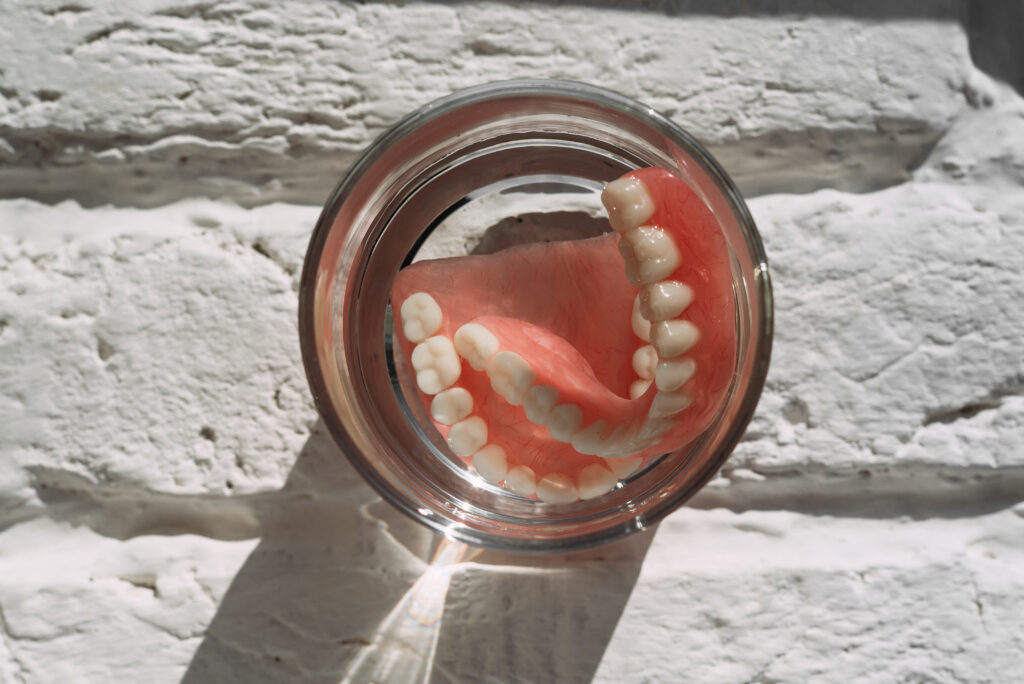
Yes. Dentures must be kept moist whenever they are out of your mouth. The acrylic they are made from holds a small amount of water as part of its structure, and letting it dry out causes the material to shrink and warp, which changes the fit permanently. Use cool water or a denture soaking solution overnight. Never use hot water, which distorts them faster than drying does.
This is one of the few pieces of denture advice where the consequence of getting it wrong is immediate, permanent and expensive, which is why it is worth understanding rather than just remembering.
A denture is a precision object. It works because its fitting surface matches the shape of your gum ridge closely enough to create suction and spread the load evenly. A change of a fraction of a millimetre across that surface is enough to turn a comfortable denture into one that rocks, rubs and produces sore spots.
The Mechanism
Denture bases are made from polymethyl methacrylate, an acrylic resin. That material is very slightly hygroscopic, meaning it absorbs and holds a small percentage of water within its structure. It is manufactured, fitted and adjusted in that hydrated state.
Take the water out and the acrylic contracts. The contraction is not uniform across the piece, because thicker and thinner sections lose water at different rates, so the denture does not simply get smaller. It distorts.
The result is a fitting surface that no longer matches the ridge it was made for. Re-soaking it afterward does not reverse this reliably: the material takes water back up but the distortion has already occurred and the shape does not return.
One night on a bedside table is often survivable. A dry holiday weekend usually is not.
What To Soak Them In
Keeping them wet is the main thing. What you keep them wet in matters more than most people expect, particularly for partial dentures with metal components.
| Liquid | Verdict | Why |
|---|---|---|
| Cool or lukewarm tap water | Fine | Perfectly adequate for overnight storage. It keeps the acrylic hydrated, which is the main job. It does not disinfect. |
| Denture cleaning solution | Best option | Keeps them hydrated and reduces the bacterial and fungal film at the same time. Rinse thoroughly before putting them back in your mouth. |
| Hot or boiling water | Never | Heat softens and warps acrylic faster than drying does, and the damage is instant and permanent. This is the single most common way dentures are ruined at home. |
| Household bleach, undiluted or as a soak | Never | Corrodes and blackens the metal parts of a partial denture and can whiten the pink acrylic unevenly. Only use a bleach-containing product if your dentist has specifically told you to and given a dilution. |
| Mouthwash | Not for soaking | The alcohol in many rinses dries the acrylic, which is the thing you are trying to avoid, and it does not clean the fitting surface. |
| Vinegar | Occasionally, with care | A diluted white vinegar soak can help lift mineral deposits. It is not a routine cleaner and it is not appropriate for partials with metal clasps. |
Each of these turns up regularly and each causes damage that is not repairable at home.
Daily Routine
A rinse under the tap clears loose food and takes ten seconds. Stand over a folded towel or a basin of water while handling them, because a denture dropped onto a hard sink usually fractures.
Once a day with a soft or dedicated denture brush and either soap, a denture cleaner, or plain water. Not toothpaste. Brushing removes the film that soaking alone leaves behind.
Cool water or a denture solution, in a covered container. This is the part that protects the fit, and it is also the rest period your gum tissue needs.
Especially after a chemical soaking solution. Those solutions are not meant to be swallowed and can irritate the mouth if the denture goes straight back in.
Brush your gums, tongue and palate with a soft brush each morning. This is what most people skip, and it is where denture stomatitis starts.
Even with no natural teeth. The ridge changes shape over time, the fit follows it, and oral cancer screening is still part of the visit.
The Thing People Miss
Storing dentures in water protects the shape. Cleaning them properly protects the tissue underneath, and these are two different jobs that plain water only does one of.
Denture stomatitis is an inflammation of the palate beneath an upper denture, usually caused by an overgrowth of Candida, a yeast that lives harmlessly in most mouths. Under a denture it has a warm, sheltered, low-oxygen surface to colonise.
Redness on the palate matching the outline of the denture, sometimes with soreness or a burning feeling. Often there are no symptoms at all, which is why it is commonly found at a checkup rather than reported.
Water keeps the acrylic hydrated and does nothing to the biofilm on it. A denture cleaning solution does both, which is why it is the better default for overnight storage.
Wearing a denture continuously gives that surface no break and no exposure to saliva, which has its own antimicrobial action. Taking them out overnight is a genuine part of the treatment.
The gum ridge under a denture continues to resorb slowly for years after teeth are lost, so a denture that fitted well at first will eventually loosen through no fault of yours. That is what a reline is for: refitting the base to the ridge as it is now. Relying on more and more adhesive to hold a loose denture accelerates the bone loss underneath it, so a denture needing steadily more adhesive is worth having assessed.
If Something Has Changed
Denture problems tend to get tolerated for far longer than they should, partly because the deterioration is gradual and partly because people assume discomfort is simply what dentures are. It is not.
Most of these are a straightforward adjustment, a reline, or a repair rather than a replacement. Denture services are available at all four of our offices in Marietta, Belpre and Parkersburg.
Bring the denture and its storage container with you, and if it fractured, bring every piece. A clean break with all the fragments present is a considerably better starting point for a repair than one where the small bits went in the bin.

People Also Ask
Yes. Whenever dentures are out of your mouth they need to be kept moist, in cool water or a denture soaking solution. The acrylic holds water as part of its structure, and drying out makes it shrink and distort, which permanently changes the fit.
They dry out and the acrylic warps. Because thicker and thinner parts of the denture lose moisture at different rates, the distortion is uneven, so the fitting surface no longer matches your gum ridge. That shows up as rocking, poor suction, sore spots and food getting underneath. Re-soaking does not reliably undo it.
No, and this is the most important thing on the page. Hot water softens and warps acrylic, and it does so faster and more severely than drying out does. Always use cool or lukewarm water. Boiling a denture to sterilise it will ruin it.
A short period out of water while you clean them is fine. Overnight on a dry surface risks measurable distortion, and a day or more without moisture is likely to change the fit. If your dentures have been left dry for an extended period, have the fit checked rather than assuming they are unaffected.
An occasional soak in diluted white vinegar can help lift mineral deposits, but it is not a routine cleaner and it is not suitable for partial dentures with metal clasps. A proper denture cleaning solution is the better default, since it keeps the acrylic hydrated and reduces the bacterial and fungal film at the same time.
No, unless your dentist has specifically told you to. Taking them out overnight lets the gum tissue and palate recover and lets saliva reach the surfaces the denture covers. Wearing them continuously is a leading contributor to denture stomatitis, an inflammation of the palate caused by yeast overgrowth.
No. Ordinary toothpaste is abrasive enough to scratch denture acrylic, and those scratches then hold stain and bacteria, so the denture gets harder to keep clean over time. Use a soft or dedicated denture brush with soap, plain water, or a denture cleaner instead.
The gum ridge underneath continues to resorb slowly for years after natural teeth are lost, so the shape the denture was made to fit gradually changes. That is normal and it is what a reline corrects. Compensating with steadily more adhesive rather than having it refitted tends to accelerate the bone loss, so a denture needing more and more adhesive is worth booking about.
This article is general information about oral health. It is not a diagnosis and it cannot account for what is happening in your own mouth. If something hurts, bleeds, or has changed, book a visit and let someone look at it.
Four Offices
Family Tree Dental has four offices across the Mid-Ohio Valley: two in Marietta, on Colegate Drive and on Acme Street, one in Belpre, and one on Rosemar Circle in Parkersburg. Every office does general, hygiene and cosmetic work, and every office opens at 7am, which is the part most patients tell us actually decides where they book.
If you are nervous about the chair, say so when you book rather than when you arrive. Pillows, blankets and cable TV are standard, and sedation options from nitrous oxide upward are available for patients who need more than that.
Most of it is an adjustment or a reline rather than a replacement. Bring it in to any of our four Mid-Ohio Valley offices and let us take a look.