
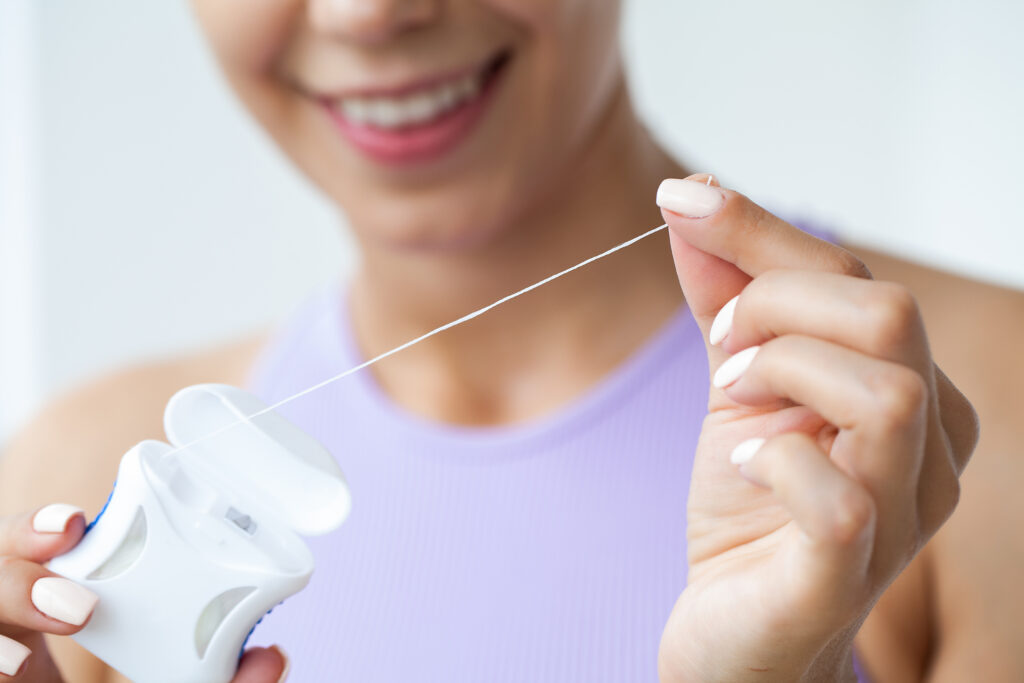
There is no single best floss. There is a best floss for the spacing, the restorations and the dexterity you actually have, and matching those is the whole exercise.
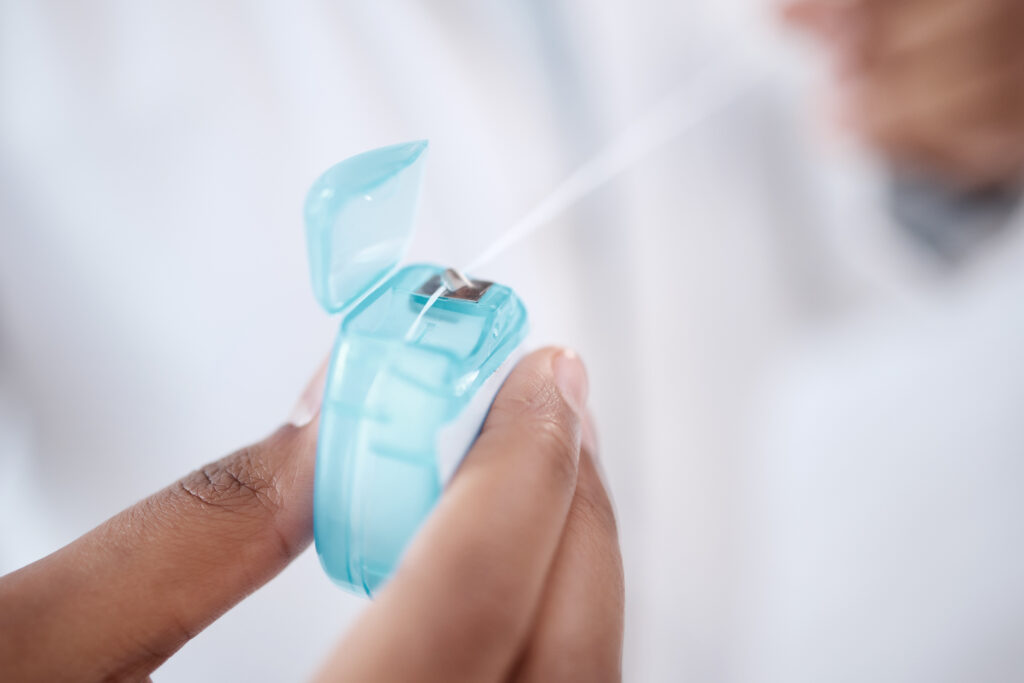
The best floss is whichever one you will actually use every day, matched to the gaps between your teeth. Waxed or PTFE floss slides through tight contacts without shredding. Unwaxed is thinner and squeaks against the tooth so you can tell it is working. Dental tape suits wider gaps. Threaders and superfloss are for bridges and braces. Where the gaps are wide enough to take one, an interdental brush removes more plaque than floss does.
Most articles on this rank floss types as though one is objectively better. That is the wrong frame, because the variable that decides the answer is not the floss, it is your mouth.
Tight contacts, wide embrasures, a bridge, braces, crowns, arthritic hands and a strong gag reflex all push toward different tools. So this page is organised around the situation rather than the product.
Start Here
Find the row that describes your situation. If more than one applies, you probably need two tools, which is completely normal and is what most people with any dental work end up using.
| If this is your situation | Use this | Why |
|---|---|---|
| Teeth are tight and floss shreds or gets stuck | Waxed floss, or PTFE monofilament floss | PTFE is a single smooth filament rather than twisted strands, so it slides through a tight contact without fraying. Persistent shredding at one spot is worth mentioning, since it often means a rough filling edge or decay. |
| Normal spacing, no restorations | Waxed or unwaxed, whichever you prefer | Both work. Unwaxed is thinner and squeaks against clean enamel, which some people find is useful feedback. Waxed is easier to handle. |
| Noticeable gaps between teeth | Dental tape, or an interdental brush | Tape is broader and flatter, so it covers more of the tooth surface. Where the gap will take an interdental brush, that is the more effective option. |
| Gum recession has opened up the spaces | Interdental brushes, sized to the gap | This is the situation where brushes clearly outperform floss. Floss cannot reach into the concave root surface that recession exposes, and a correctly sized brush does. |
| You have a bridge | Floss threaders or superfloss | You cannot pass ordinary floss between the units of a bridge from above. A threader carries floss underneath the false tooth, which is exactly where debris collects. |
| You wear braces | Superfloss, threaders, or a water flosser | The archwire blocks the normal route in. Superfloss has a stiff end for threading and a spongy section for the wider spaces around brackets. |
| Implants | Floss designed for implants, or a soft interdental brush | The tissue seal around an implant is more delicate than around a natural tooth. Ask what is appropriate for your specific restoration rather than guessing. |
| Limited dexterity, arthritis, or you are flossing for someone else | Floss picks, a floss holder, or a water flosser | The best floss remains the one that gets used. A pick used daily beats string floss used twice a month by a wide margin. |
| Strong gag reflex reaching the back teeth | A floss holder with a long handle, or a water flosser | Both let you reach the back contacts without getting your hands as far into your mouth. |
The Formats
Nylon strands with a wax coating. The wax helps it slide through tight contacts and resists shredding. Slightly thicker than unwaxed, which occasionally matters at a very tight contact.
Bare nylon strands. Thinner, and it squeaks audibly against a clean tooth surface, which some people like as confirmation. More prone to fraying and snapping.
A single smooth filament rather than twisted strands. Slides through the tightest contacts and essentially does not shred. The usual recommendation when ordinary floss keeps catching.
Flatter and broader than round floss. Covers more surface area per pass, which suits wider gaps and does not fit tight ones.
One length with three sections: a stiffened end for threading, a spongy middle for wide spaces, and regular floss. Made for bridges, braces and implants.
Floss held in a small plastic handle. Much easier to use, and harder to get the C shape around each tooth. A real improvement over not flossing and slightly less thorough when done properly.
Small tapered bristle brushes in graded sizes. Where the gap accommodates one, they remove more plaque than floss. They do not fit genuinely tight contacts.
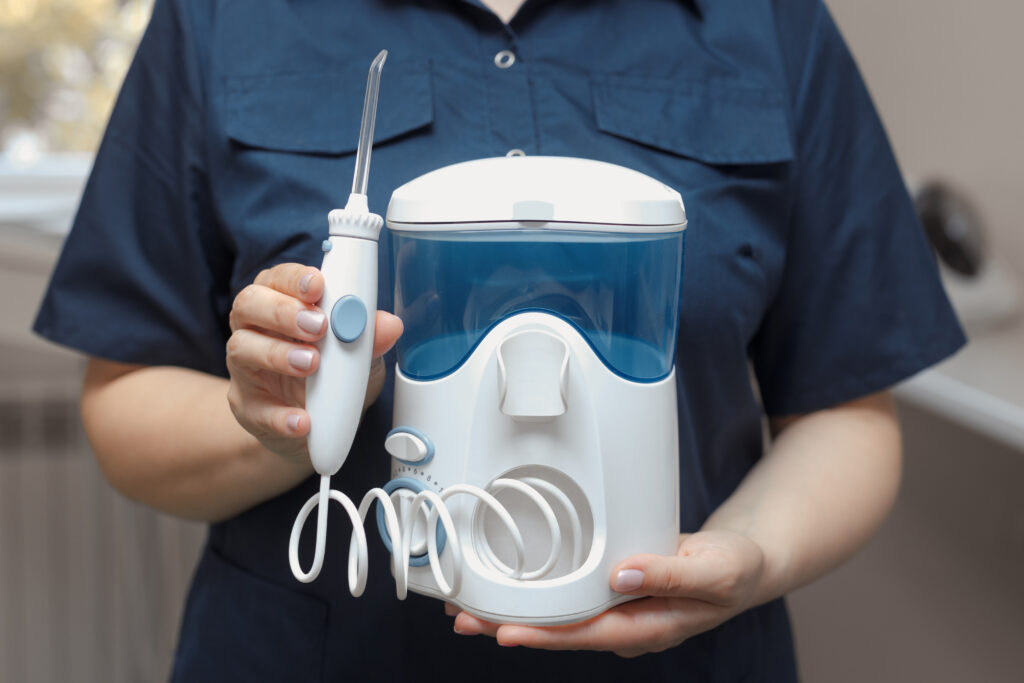
A pressurised water stream that flushes debris from between teeth and below the gumline. Particularly useful with braces, bridges and implants, and for anyone who finds string floss impractical.
Where a gap is wide enough to take an interdental brush, the brush is generally more effective than floss at removing plaque, because the bristles contact the concave surfaces of the tooth that a flat strand of floss bridges straight across. Floss remains the right tool for contacts too tight to admit a brush. Most people with any gum recession need both.
Technique
Choosing the right floss matters considerably less than using it correctly, and the most common error is easy to describe and easy to fix.
Snapping the floss straight down through the contact and pulling it back out cleans the contact point and misses the two surfaces you were trying to reach. Those surfaces are the sides of each tooth, curving down below the gumline, and reaching them requires a deliberate change of direction.
Bleeding for the first several days of a new routine is inflamed tissue reacting to being disturbed and it typically settles within one to two weeks. Bleeding still happening every time after two weeks is the point to have it looked at rather than the point to stop.
Common Questions Settled
Before, if you want the marginal advantage. Cleaning between the teeth first opens up those surfaces so the fluoride in your toothpaste reaches them. The difference is small and the consistency matters far more, so the honest answer is whichever order you will keep doing.
For flushing debris and for reducing gum bleeding, water flossers perform well, and they are particularly valuable around braces, bridges and implants. String floss and interdental brushes have the edge on scraping the sticky biofilm off a flat tooth surface. Many people do best using a water flosser plus one of the others.
Yes, with a caveat. The fixed span makes the C shape hard to achieve, so each pass is somewhat less thorough. A pick used every day is far better than string floss used occasionally, and if picks are what makes it happen, use picks.
Once a day. Plaque left between the teeth matures into a more damaging colony over roughly 24 to 48 hours, so daily disruption is what breaks the cycle. Twice a day is not meaningfully better.
Advance to a fresh section as you move between contacts rather than reusing the same inch throughout. Reusing it moves debris and bacteria from one space to the next.
Getting It Right For You
The genuinely useful version of this article is a hygienist looking in your mouth and telling you which of the above applies to you, because the sizing of interdental brushes in particular is not something to guess at. A brush that is too small does nothing and one that is too large damages the tissue.
It is a two minute conversation at the end of a normal hygiene appointment and it is worth asking for by name. Most people never do, and then buy floss based on packaging.
One thing worth flagging while you are there: floss that consistently shreds or catches at the same contact usually means something physical is there, typically a rough filling margin, an overhanging edge on a restoration, or decay between the two teeth. That is not a floss problem and switching brands will not solve it.
All four offices in Marietta, Belpre and Parkersburg open at 7am, and if the gums have been bleeding for a while, gum disease treatment is the thing that actually resolves it rather than a change of floss.
People Also Ask
The one that fits your spacing and that you will use daily. For tight contacts, PTFE monofilament floss slides through without shredding. For normal spacing, waxed or unwaxed both work well. Where the gaps are wide enough to accept one, an interdental brush removes more plaque than floss does.
Neither is better in general. Waxed floss is coated so it slides through tight contacts more easily and resists shredding, which makes it the more forgiving choice. Unwaxed is thinner and squeaks against a clean tooth surface, which some people find useful as feedback, but it frays and snaps more readily.
Dental tape. It is flatter and broader than round floss, so each pass covers more of the tooth surface. It suits wider gaps between teeth and will not fit through tight contacts. Superfloss also has a thicker spongy section, but that is designed specifically for bridges and braces rather than for general use.
Before, by a small margin. Cleaning between the teeth first clears those surfaces so the fluoride in your toothpaste can reach them. The size of that advantage is modest compared with simply doing it every day, so pick the order you will stick to.
Where the gap is wide enough to take one, generally yes. The bristles reach the concave tooth surfaces that a flat strand of floss passes straight over, which matters especially where gum recession has exposed the root. Floss remains the right tool for contacts too tight for a brush, and many people need both.
Slightly less effective when both are used properly, because the fixed span of a pick makes it hard to curve the floss into a C shape around each tooth. That said, a floss pick used every day is considerably better than string floss used occasionally, so if picks are what makes it a habit, use picks.
It depends what you are measuring. Water flossers are effective at flushing debris and at reducing gum bleeding, and they are particularly useful around braces, bridges and implants. String floss and interdental brushes are better at physically scraping the sticky plaque film off the tooth surface. Using a water flosser alongside one of the others is a strong combination.
Because something physical is catching it. The usual causes are a rough or overhanging edge on a filling or crown, or decay on the side of a tooth. Switching to a PTFE floss will stop the shredding without addressing the cause, so a contact that consistently shreds floss is worth mentioning at your next appointment.
This article is general information about oral health. It is not a diagnosis and it cannot account for what is happening in your own mouth. If something hurts, bleeds, or has changed, book a visit and let someone look at it.
Four Offices
Family Tree Dental has four offices across the Mid-Ohio Valley: two in Marietta, on Colegate Drive and on Acme Street, one in Belpre, and one on Rosemar Circle in Parkersburg. Every office does general, hygiene and cosmetic work, and every office opens at 7am, which is the part most patients tell us actually decides where they book.
If you are nervous about the chair, say so when you book rather than when you arrive. Pillows, blankets and cable TV are standard, and sedation options from nitrous oxide upward are available for patients who need more than that.
Ask at your next cleaning and we will size it properly, especially for interdental brushes. Four offices across Marietta, Belpre and Parkersburg.